Hi everyone,
Thanks for checking in again this week where we’re going to start on our series of posts about ingredients. This week it’s Malt, but before we get onto that…
Last Week In New Beerginnings
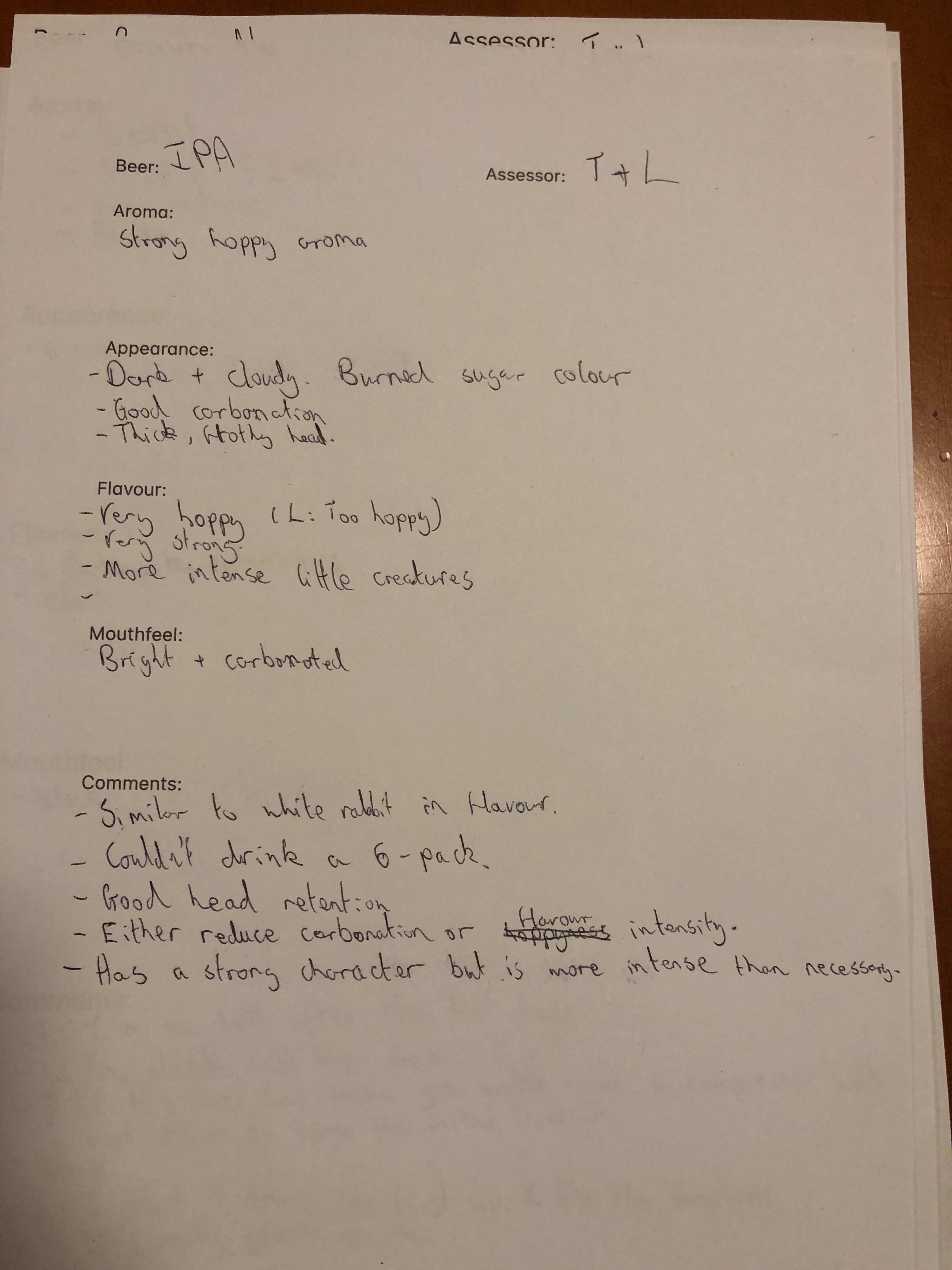
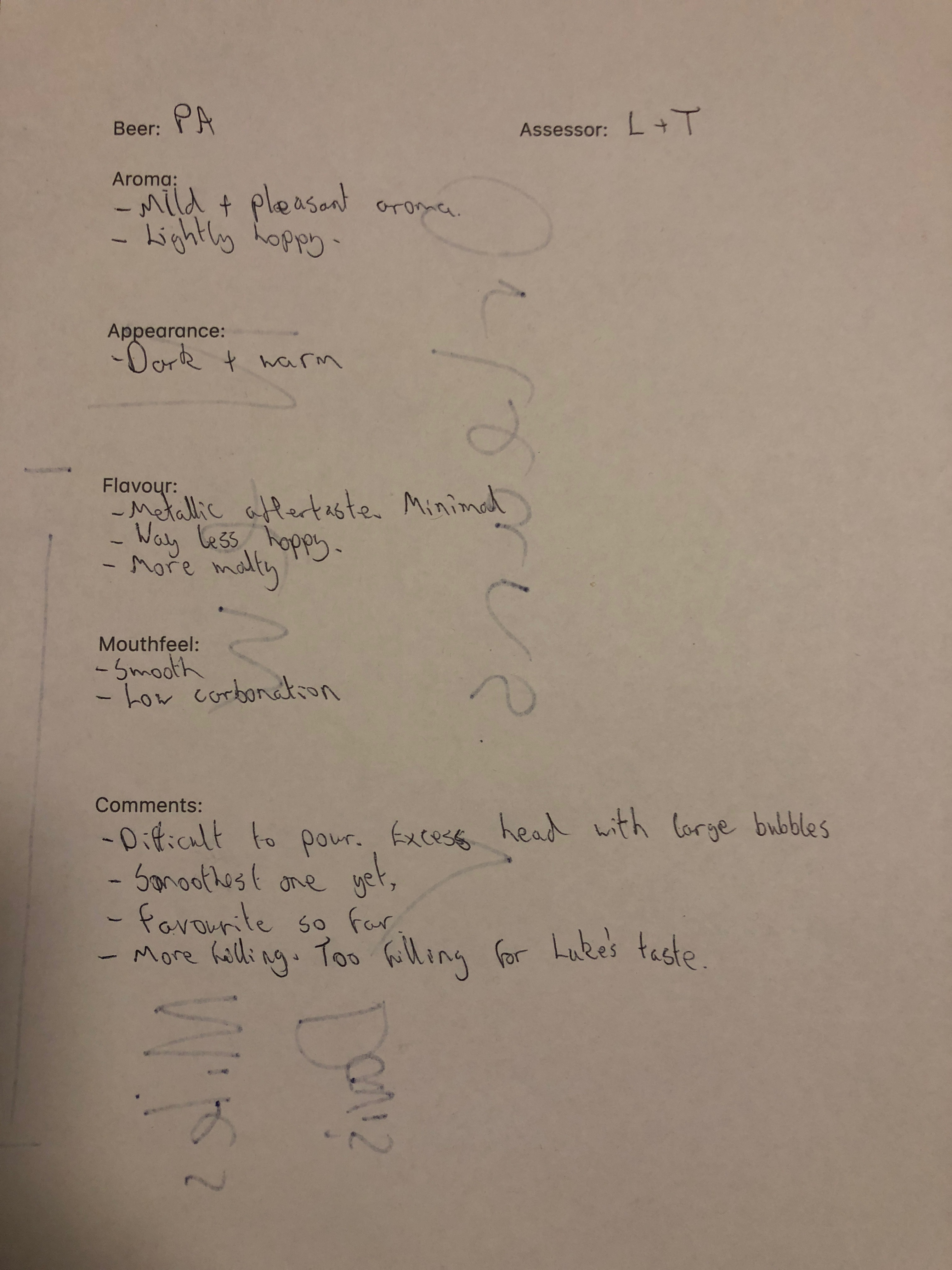
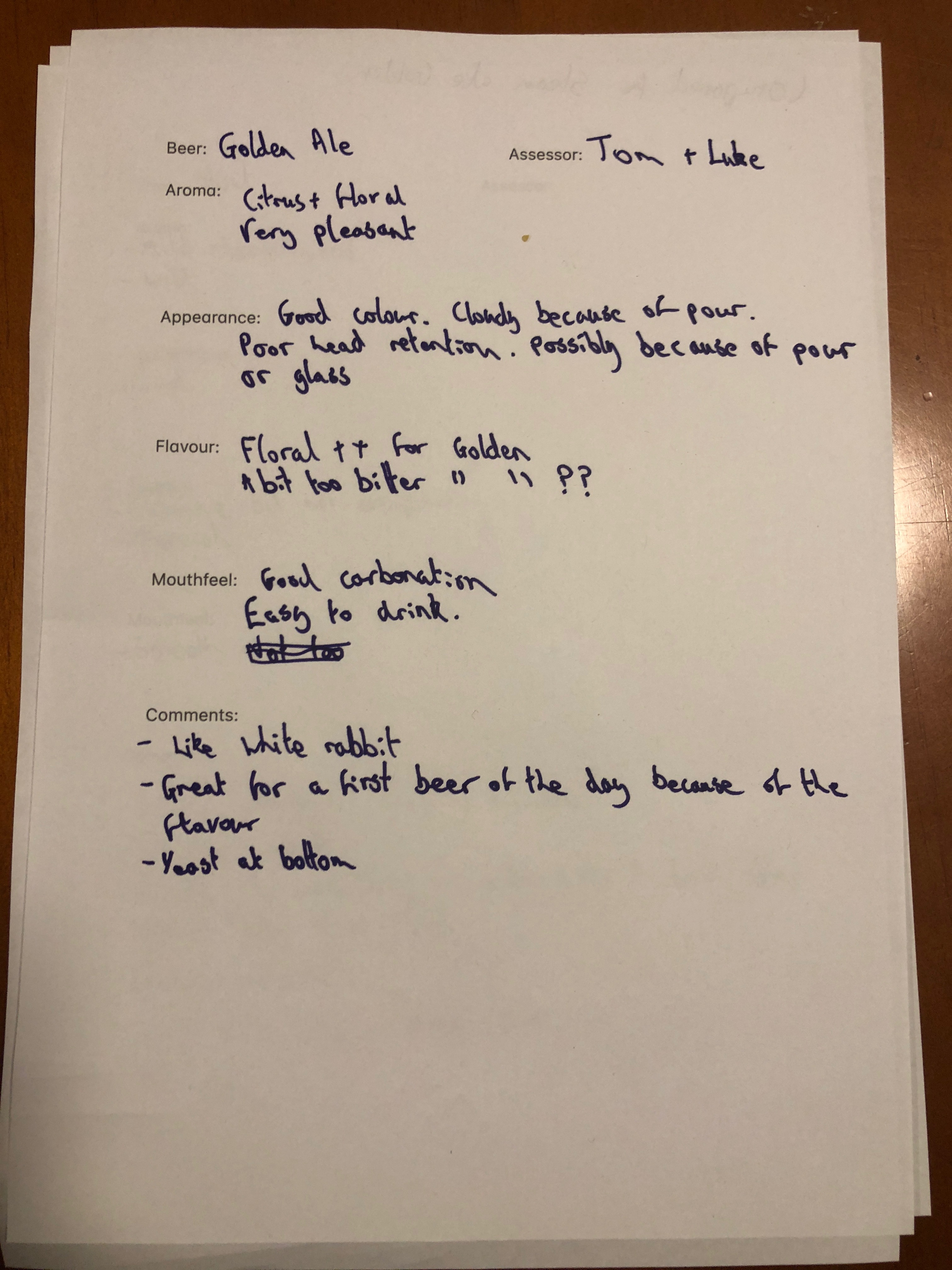
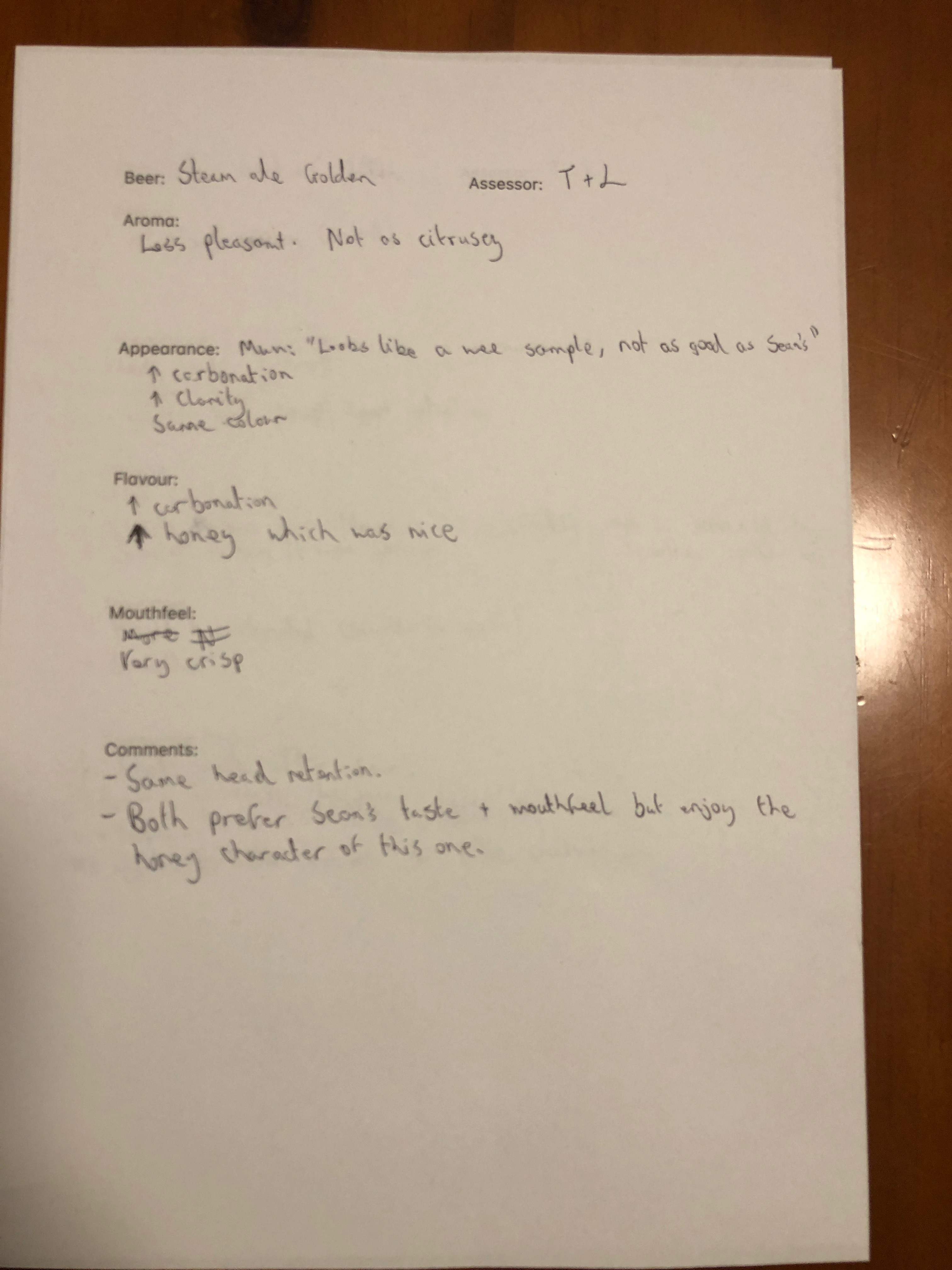
I have to admit, this past week has been a quiet one for me on the beer front. What I have done, and would encourage you all to try at some stage is get friends/family to review and judge your beer. I sent some beer down to my brother for him to try. Since he is heavily into exploring craft beers and has a buddy that he regularly tries beers with he decided to do a full tasting panel!
I set him up with the BJCP Style Guidelines and he made a scoresheet. Not only did he do this but he went out and got a comparable beer from the same style as each of mine to see how it ranked against a commercial counterpart. Here is the list of what I sent him along with the commercial beer and their scoresheets:
English IPA – Little Creatures IPA (not an english IPA but commercial examples of that can be hard to find in Aus)
American Pale Ale – Kosciuszko Pale Ale – No Review
Golden Ale – Steam Ale Golden Ale
Irish Stout – Guinness – no review due to drunkeness….no really!
American Brown Ale – White Rabbit Dark Ale – As above, although he later revealed that the commercial one was “like eating fairy bread compared to Ffffffire!”
Some of the beers I sent them were not my proudest creations but they seemed to enjoy them and it was interesting to get some more impartial feedback than just my own. If you’re game to let you buddies free with a scoresheet and a flight of your beers, I suggest you do it. It made me think twice about some beers that I had all but written off and has given me some goals for next time.
Now on to this week’s topic…
Malt, other than water, is arguably the biggest component to beer. Without it, we would essentially have bitter water, there would be no colour to it, no sweetness, no alcohol, as much body and mouthfeel as a cold cup of tea. Not great.
Because of this importance, and the importance of all components that make up our beer I thought it appropriate to go into some detail and do a spotlight post for each major ingredient, starting with Malt.
In this post, we will go through some classifications of malts, how to tell them apart, how to use them as well as touch on the malting process itself from crop to mash to help you get some perspective and perhaps a new appreciation for this wonderful ingredient.
Types of Malt + Their Creation
Types of Grain Used in Brewing
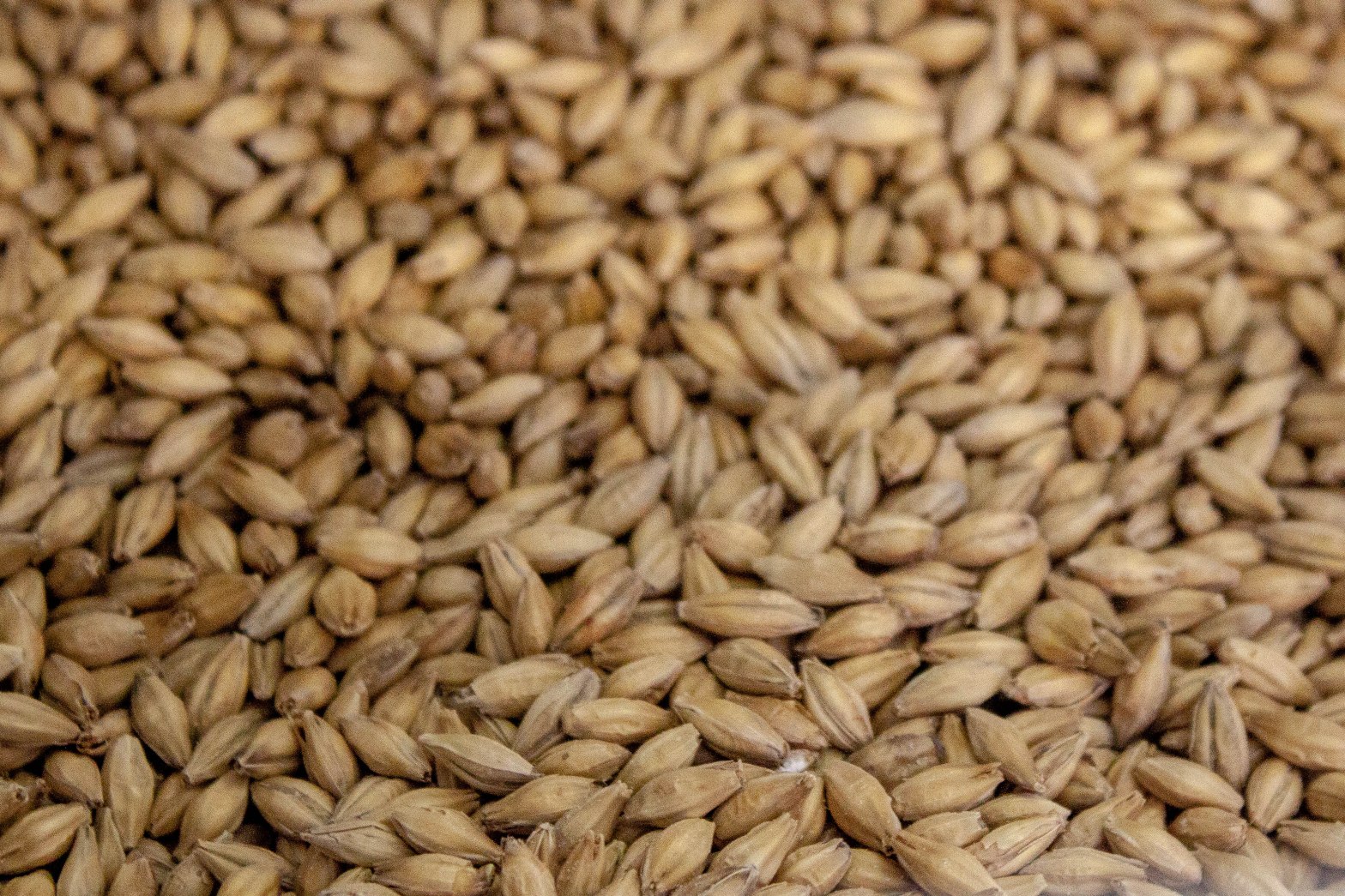
The predominant type of grain referred to when discussing Malt is barley. More specifically, Hordeum Vulgare, a species of monocotyledonous grass, of the family Gramineae. It’s ancestors were derived from the Middle East, what used to be called Mesopotamia and other surrounding countries such as modern day Syria and Iraq. Modern day Barley is grown and sold the world over to cover the needs of brewers but mainly farming and industry as animal feed. The difference between Malting and Feed Barley is the protein and moisture content, so if you come across a cheap sack of grain that doesn’t look like it’s specifically for brewing, it probably isn’t and won’t make very good beer!
Barley however, is not the only grain used for brewing beer. We will be covering all the bases in this post, if it’s a grain and can go in a mash, we’ll cover it! But first I’d like to break down ‘Malts’ a little more, into two separate categories that serve two very different purposes.
Base Malts & Specialty Malts
There are 2 classifications of Malts that encompass all varieties at the brewing stage, Base Malts and Specialty Malts. Base Malts are always going to make up the majority of your malt bill or grist. They are usually only lightly to medium kilned so as to not denature many enzymes and maintain a higher potential for starch to sugar conversion. They are an essential component to brewing and without them your beer would be unbalanced and lacking in several desirable aspects. This said, because they are usually only lightly kilned, the beer they produce on their own is light in colour and flavour. The need for this additional colour and flavour paves the way for our next category.
To make beers more exciting and have a broader range of potential flavours and colours, brewers make use of Specialty Malts. These are malts that have generally been kilned for longer, producing a darker end product to both colour the beer and alter its flavour. Specialty Malts are not generally used as the sole ingredient in a brew since the longer and/or hotter kilning process denatures the enzymes it contains meaning it cannot convert much starch to sugar. It requires use in combination with base malts to develop these sugars.
2-Row Barley
By far the most common type of malt used in beer is 2-Row Barley. It is called so because of the shape of the plant itself. When looking down at a head of Barley from above, it appears to have 2 rows of grain. See below

The reason for this being the most popular grain is simple, it has the highest starch content per weight of grain than any of the other Malts in this post. The more starch, the more poential sugar, the more alcohol for the same weight of grain. It also has much more evenly-sized grains than 6-Row Barley, making it preferable for brewers as they can set a predicatble width for their mill and not get half the grains pummled into flour while the other half remain untouched. It can be used as a base and specialty malt in up to 100% of the grist with no other grains.
6-Row Barley
The other type of Barley commonly used in brewing is 6-Row Barley. After reading the description of 2-Row barley above, I’m betting you can guess why it’s called 6-Row? I’ll tell you anyway! It’s because when looking down at the head from above, it appears to have 6 individual rows of grain. See Below.
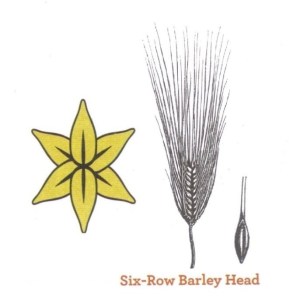 Image obtained from brulosophy.com
Why do we need a second type of Barley if 2-Row is so great? The answer is simple, it’s cheap. It’s most commonly used by large commercial breweries, particularly in the US. Think Bud, Coors, Miller etc. It’s cheap because it has several aspects of its anatomy that are “undesirable” in comparison to 2-Row Barley.
– Less available Starch
– More Protein (enzymes)
– Thicker husk
This makes 6-Row is itself far less efficient as there is plenty of protein, but not as much starch to convert with it. This is what makes it cheaper, the lack of potential for it to produce as much ABV per weight of grain.
These attributes though, do have some advantages that make brewing with 6-Row a worthwhile endeavour.
Because they have more proteins, they are able to help out enzymatic activity when used with other Malts/adjuncts in the mash that are lacking in protein content of their own. Their thicker husks also help the lautering step of the mash when using grains/adjuncts that have not got husks of their own. It surrounds them so they don’t clump together and produce problems like a stuck mash or stuck sparge where the water can’t get flow through and help extract sugars to form wort.
Wheat
One such alternative Malt is Wheat. Wheat, even moreso than Barley, is probably the most popular and widespread crop on the planet. It is used in everything from Beer to bread, to animal feed and all sorts of other industry. We will focus on its use in brewing.
As previously mentioned Wheat lacks husks, a byproduct of heavy selective breeding over many years that has benefit for all uses of wheat except brewing. If used with no other additions to help lautering, it would become an impenetrable paste and you could not sparge or drain effectively, ending up with a stuck mash. Use at least 30% grist of non wheat such as rice hulls and/or decent levels of Barley to circumvent this problem.
Wheat can give a very light and delicate mouthfeel, golden colour and often a slight acidity & crispness. It’s also not as modified as barley at the malting stage, meaning germination leaves more longer chain proteins instead of short ones that must be dealt with in the mash, which reduces efficiency. A multi-step mash is a must when brewing with high proportions of wheat in the grist to help the proteins contained within to do their job and convert as much starch as possible. Some styles require wheat as part of the grist. Weissbier for example (being a Wheat beer) must have at least 50% wheat to be considered in style.
Rye
Rye, like Wheat, is a husk-less Malt that is predominantly used in bread-making. It gives a wonderful slightly spicy flavour and a rounded, full mouthfeel. Can impart reddish hues to the beer. It’s generally recommended to use only up to 20% of the grist but can be used in higher proportions if counteracting with other grains/adjuncts such as 6-Row Barley or rice hulls.
Oats
Oats, we all know them from dishes like porridge, some forms of bread, cookies etc so it only makes sense that someone at some point said “Hey, let’s chuck them into this beer and see what happens!” Boy I’m glad they did. Oats impart a delicious flavour to beer but are most often associated with the very full body and mouthfeel they give, akin to drinking a pint of bread! The mouthfeel can also be described as Oily sometimes (in a good way, if that makes sense). Oats are an essential part of some beers now, obviously there are beers that they lend themselves to very nicely such as oatmeal stouts and the like but in terms of more “in-vogue” beers, they are an essential component of a New England IPA (NEIPA) to give that characteristic mouthfeel.
Again they are a husk-less grain, but unlike Wheat or Rye, Oats actually get de-husked intentionally. They are also often steamed to gelatinise the starch contained within.
Some considerations are:
– Cook whole/flaked/rolled oats before adding them to the mash to ensure they work best, alternatively use Quick Oats, which have been pre-cooked. Do not use minute or microwavable oats as they are generally too small and become clumpy, leading the lautering problems.
– It’s generally recommended to use them only up to 10% of the grist.
Rice
Rice has many uses and is the staple food in many countries. Drinks such as Sake, although usually considered a rice wine, is actually closer to a beer in it’s creation. The rice, traditionally is not malted but rather hydrolysed using a combination of polishing to reveal the endosperm and then exposing it to a fungus to develop enzymes that will turn the starch to sugar.
In terms of its history in beer as we know it however, it was used by earlier US brewers to supplement inefficient 6-row Barley. The extra enzymes in the Barley would help to convert the starches to sugars and thicker husks would help it not to gelatinise, allowing sparging and draining to take place. This tradition is used still today by large American breweries such a Budweiser to add extra sugars to their wort.
Rice gives a very thin/low mouthfeel and dry due to almost all fermentable sugar. It also adds next to nothing in terms of colour.
Considerations:
– Must be cooked before adding to the mash to gelatinise the starch.
– General recommendation is to use no more than 30%
Corn
The final type of grain that I’ll cover in this post is Corn. Again, corn is grown the world over, primarily for uses other than beer. However, in beer it is a excellent source of starch and converts to sugar very well. It gives a very light colour to the wort and adds very little body or flavour.
Typically used up to 20% of grist. Again, it must be cooked before adding to ther mash unless using Torrified/flaked corn.
Malting Process
Grain is steeped in water to encourage germination to start, it is left to rest and is carefully monitored until germination has occurred to just the right amount then is kilned or roasted to stop the germination. After this the malted grains are polished to remove the beginnings of any roots and the stem that have sprouted as a result of germination.
The Malting process is designed to break down proteins in the grain as well as develop enzymes and starches necessary for conversion to sugars later during the mash.
The grains are steeped for up to 2 days and are repeatedly drained and covered with fresh clean water over approximately 8 hour periods until the roots begin to sprout. After this they are moved in a germination room that is kept between 14-19 degrees for several days. During this time, the grains are sprouting and growing roots rapidly. They can easily become tangled together so to prevent this they must be moved and turned regularly. This used to be done by hand, a process known as floor malting which is still used in some malt houses today. But for the most part the turning of the germinating malt nowadays is done by machinery, most commonly big spirals acting as Archimedes screws and moving the malt vertically upwards so it is constantly in motion.
After this the grains are transferred to a kiln that dries them back down to a moisture level of around 3-6% where it will be able to be safely stored for months. As we know by now from previous explanation of the mashing process, raising the temperature too much (beyond 75°C or so) will denature the enzyme making it unable to be used anymore for conversion of starch into sugar. Killing usually happens in temperature increments, stepping up 2-4 hours from 60-70°C to around 80-90°C. So why does this denaturing of the enzymes not occur? It’s because as the temperature goes up so gradually, the grains dry out, the enzymes which rely upon a certain amount of moisture content, become dormant instead of denatured. This is reactivated again later during the mash since heat and moisture are reintroduced.
The exception to this rule is darker specialty malts such as caramel, black or crystal malts which go through a drastically different malting process to base malts. They are germinated for longer, long enough for proteins to break down further and the enzymes to actually start converting starches to sugar. After this the grains are kilned or roasted at a higher temperature and/or for a longer period of time to allow the sugars in the grains to crystallise. As a result, these grains are darker than base malts but also usually add some extra body and sweetness to give the beer a different character.
Malt Uses
I have already touched on this a little with the concept of base and specialty malts. You have a base malt that makes up for the majority of you beer’s fermentable sugar content as well as flavour/aroma/colour and you have your specialty malt that gives a beer (usually) the maority of its colour but also flavour, body, head retention etc.
Different combinations of these make for drastically different beers. Lets focus on Specialty Malts for a moment, we already know that they add many qualities to beer in terms of colour and flavour but there are others that serve specific purposes and are a great tool to have at you disposal.
- Carapils ® – This is a Malt most famously and originally produced by Briess. It is a proprietary malt designed to improve body and head retention while adding next to nothing in terms of flavour or colour. There are many brewers who use this to great effect but what must be considered is that it’s easy to overcompensate and start to use it as a safety net for poor practice. Nowadays I tend to use it if I’m doing a style that calls for a particularly strong and long-lasting head. It is exclusive to Briess in the US but produced by other suppliers worldwide where the same trademarks may not apply.
- BEST MALZ RED X – This Malt is specifically designed to brew red beers, it can be used in up to 100% of the grist so can work as a base malt although technically a specialty. A really unique malt for Red ales or putting a bit of fire into your favourite recipe, it also creates a full and rounded body with a clean finish.
- Black Malt – This heavily roasted malt is perfect in small doses for darkening a beer slightly and larger doses perfect as the specialty malt for a stout. Be careful though as too much will give you a very strong roast character that may be undesirable.
- Crystal Malt – We couldn’t talk about Specialty Malts without mentioning crystal malt. It is the flavour, aroma and rich colour of such a wide variety of beers. They impart a nice sweetness and even roasty character in larger doses and are available in different grades of roast. English and Australian companies generally use Light, Medium and Dark to describe the malts but companies in the US use a measurement called Degrees Lovibond which is quantitative measurement of light degradation in a certain depth at a specific wavelength. They are typically sold as “Crystal 20 through to Crystal 120 “and above in 20°L increments.
But these Malts, other than Red X, wouldn’t make a beer on their own, the all important base malt is needed to give a canvas to the beer on which the specialty malts can sit, either to accentuate parts of the base malt or provide some colour of their own. This said, it is always worth taking care in choosing your base malt as the wrong malt can make or break a great beer. Here is a breakdown of some common base malts and their characteristics.
- Pale Malt – Arguably one of the most versatile base malts, Pale 2-Row makes a great base for everything from lagers to porters and anything in between. It is my usual starting point when creating a recipe unless I want a particular flavour or am doing a style that necessitates a specific malt like Pilsner.
- Pale Ale Malt – The difference between this and regular Pale Malt is that Pale Ale Malt is generally used more in British style ales but can also make a great addition to lagers.
- Pilsner Malt – This Malt is a very light coloured pale malt. Obviously used predominantly for Pilsners but also great for use in many light beers in which a clean, cracker-like flavour is desired. The biggest consideration with this malt is that due to a very light kilning, it is prone to develop DMS which can give an unpleasant corn off flavour. To get around this it’s generally recommended to boil for a little longer as the boiling process helps to remove the precursors to DMS.
- Golden Promise – This is a traditional Scottish malt that is equivalent to a pale ale malt. It produces a very pleasant, sweet and golden wort.
- Munich – This malt is traditionally used in German styles and has a slightly higher than average nitrogen content. This makes for a denser and more compact endosperm (the starch content of the grain) and a good multi-step mashing process can be required to make full use of all that the grain has to offer. Darker colours due to the kilning process occurring at a higher temperature than many other base malts. Because it can be tricky to deal with, some brewers use it in conjunction with other grains to help boost the amount of sugar converted in the mash.
Conclusion
Thanks for following along with this week’s massive post on malt. I think it is important to know as much about our ingredients as possible so we can be discerning in our recipe creation and make sure we choose the right tool for the job, resulting in better beer. Join us next week where the ingredients series continues with an in depth look at our favourite bitter plant, Hops.
Best,
Sean
If you have any feedback or edit suggestions for this post please contact us and let us know. We want to ensure the correct information is presented in the best possible way so that fellow brewers can stay well-informed.
Want to stay up to date with the latest from Sean and New Beerginnings? Like us on Facebook and Instagram or reach out to us on Reddit.
 New Beer-ginnings



3 thoughts on “Ingredients Series – Malt”