Hi everyone,
Thanks for joining us this week to go through the vast array of any equipment you may need for brewing.
But before I get onto that, here’s what New Beerginnings has been up to in the last week with brewing:
 – New Logo! I had an incredibly kind offer from a graphic designer in the UK to do up a logo for me. We discussed what I wanted in a logo for New Beerginnings and I’m so incredibly pleased with the result. Please check him out and give him props at www.stevestarkdesign.com
– Connecting on social media – Because I want to help reach as many people as possible I’ve been working on getting out there on Facebook both on the NB page and several home brewing groups.
– Gauging interest – As part of the social media front I’ve been trying to gauge which possible topics would be of the most interest for the blog to cover. There was a very good response but it was also varied, so in short, the future of New Beerginnings will be varied! We’re going to be covering everything from Ingredients, process and equipment to The chemistry/biology of brewing, some myth debunking and continuing the brew day post series.
Now onto this week’s main topic…
As always, please refer to our Glossary for any terms that are not explained in the post. If you come across a term you think is missing or think needs redefining, please let us know!
Brewing Equipment
Every brewer generally has some sort of specialised equipment that’s unique to brewing. For some it’s just the fermenter and the rest they get by with kitchen equipment, while others have spent significant time and effort creating a high-end, bespoke system designed from the ground up to create beer. While any combination of the right equipment will create wonderful wonderful beer, it’s up to the individual brewer to decide what works best for their own needs.
In an attempt to add some level of organisation to what could be a blog in itself I’ll break this down into a couple of sections:
– Overview & Example – Example of some low to high budget brewing systems to form a basis for the rest of the article.
– Pre-Mash – Any equipment used from the raw ingredients to mash stage. May not be relevant for low budget systems.
– Mash – Any equipment used during the mashing and sparging steps.
– Boil – Any equipment used during the boil process.
– Cooling – A range of equipment used for cooling.
– Fermentation – Any equipment used during fermentation.
– Packaging – Equipment required for packing, from bottling to kegging. Canning not covered due to how uncommon it is in home brewing.
Each of these sections will give a range of possible equipment from low to high budget with their pros and cons listed along with the expected price.
Overview & Example
At the very base level you need:
– A Large Pot to Mash/Boil in.
– A Fermenter.
– A Spoon to stir the mash/wort.
– A Bag of some sort to hold grains or hops.
So something like this, plus a sealed bucket in which to ferment your wort and turn it into beer.

With this you can brew and ferment a batch of beer but it misses out several items that allow further control and finessing of certain aspects of the process. To put this in perspective, here is an example of a large high end system:
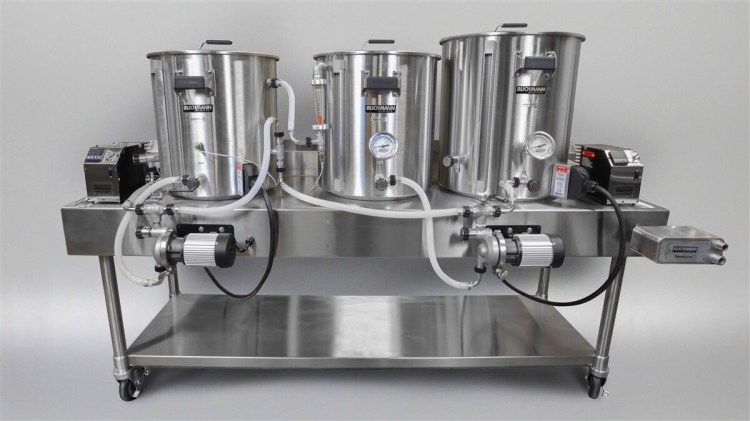 Blichman Engineering 5 Galon Electric HERMS System ©Blichman Engineering
This level of equipment has many more features for precise control of all elements of the brewing process. There are pumps to move water and wort around, burners or electrical elements for heating and they are designed in such a way that a system control panel can automate the process based on certain parameters that you give it.
I have not yet upgraded to a system like this as my brewing space is not set up to handle something like this. Plus, they can get phenomenally expensive! For now I have a fantastic system that you would have seen if you saw my previous Brew Day Post. The Grainfather or systems like it are a great step towards a more accurately controlled, easy to program automated system.
Pre-Mash
This step involves milling grain and heating water so the equipment required is fairly simple.
 Malt Muncher 2 Roller Mill – Approx $150
A mill, like the one above, is a device that crushes grains between 2 or 3 rollers to open up the husks and allow access to the starches contained within. There are cheaper and more expensive models and your local home brew store should be able to guide you in the right direction for your needs based on their stock. What I will mention is that some models with smooth rollers have been noted to have trouble pulling the grain through, I’d advise buying a mill with either a textured surface or one with pre-cut grooves. Some people have also cut small grooves into the rollers themselves to assist in pulling the grain through. NOTE: A mill is not required if you are buying your grains pre-crushed from the store or are an extract-only brewer.
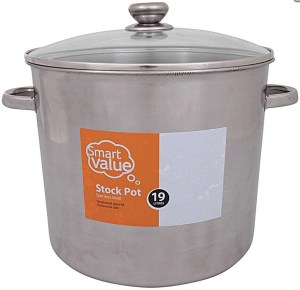
A large pot to use as a hot liquor tank. Liquor in this sense is just a liquid and is not to suggest you should mash your grains in vodka! This pot can be basic like the one above (which I found in a department store for $20) or far more advanced like this one which will be more precise in the way it holds temperature as well as having a bigger volume. NOTE: If brewing using BIAB, this is not required as it is a single vessel brewing method.
Example Options with costs:
Small stock pot, no mill: $20
Large pot, 2 roller mill: $249.99
Mash Tun, 3 roller mill: $959.99
Mash
For this step you need a Mash Tun and something to facilitate sparging (unless using BIAB) and depending on your sparging method, you may require a pump.
 SS Brewtech InfuSsion Mash Tun
A Mash Tun is basically a pot that will hold hot water and grains and maintain a specific temperature for an extended period of time. Ones like the SS Brewtech Tun above are specifically designed vessels with a double wall insulated with dense foam and have thermometers built in. They are incredible but can also set you back a fair chunk of cash. More economical methods exist with some, dare I say, home brewed setups. These include making insulated wrapping around a regular pot to improve its heat retention properties or my personal favourite, an esky (or cooler, for those of you reading overseas and have no idea what I’m talking about!). Coolers or eskys are already designed with heat retention in mind and are very well insulated to stay at a given temperature for extended periods of time, it’s just that they’re usually used cold.
One consideration you have to make is how to perform the last step of the process, Lautering, which is to separate the wort from the grain. To do this, most Mash tuns make use of a false bottom, a thin metal mesh that sits just above the bottom of the mash tun. This holds the grains above any of the exit holes plus lets the grain act as a natural filter for itself as the wort exits at the bottom and recirculates through the top or the sparging process takes place. The basic setup would look similar to this (please excuse my horrendous hand-drawn illustration!):

Here is a photo that shows more detail on a fly sparge system, which is basically just a way of spraying the recirculated wort evenly into the top of the Mash Tun.

Example Options with costs:
Esky, Tap & BIAB, Batch Sparge Jug: $142.50
Grainfather – Pump, recirculation, False bottom all built in, Batch Sparge jug: $1,265
Dedicated Mash Tun, Pump + 2m of tubing, Recirculation/sparge arm: $1,047
Boil
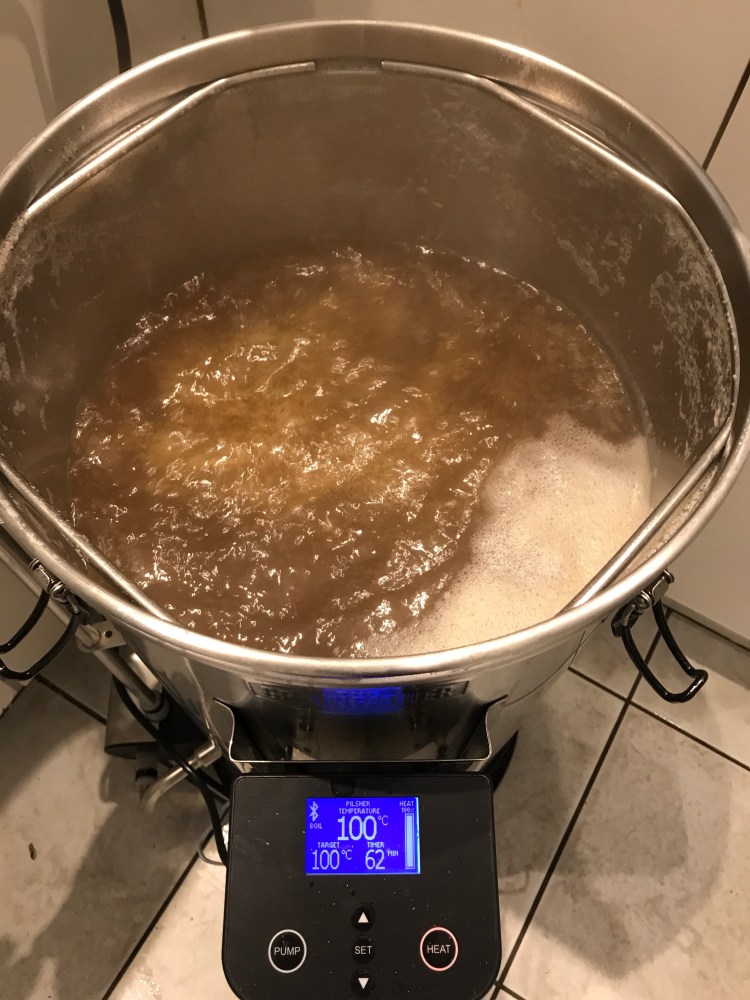
Although a simple activity, there are still things to consider to achieve certain results when choosing your boil kettle. More advanced units have additions like inbuilt thermometers, whirlpool arms to help concentrate hop matter in the centre or even internal rotating arms or filters for the tap to assist in getting wort out while leaving trub behind. The main thing to consider is how much beer you would like to make, then get a boil kettle that can hold more than this amount. Several litres of wort will boil off during the 60 minute or higher boil so a 30L kettle at an absolute minimum is recommended for a ~20L batch.
The only other items you may need are a burner if your stove isn’t powerful enough to boil the amount of liquid required (most home stove tops are not powerful enough), a spoon for stirring the wort and a container for the hops, called a hop spider.
Example Options with costs:
Pot, Spoon, Hop Spider: $142
Grainfather, Spoon: $1,254 ($0 if previously purchased for mashing step)
Dedicated Kettle, Spoon, Hop Spider: $502
Cooling
This section has actually been covered already in a previous blog post about the brew day process so I’ll take an excerpt from that post and expand on it:
Cooling
When the boil is finished the wort is actually quite vulnerable microbiologically. It has risk of infection by airborne yeast or bacteria but we can’t pitch our chosen yeast that we wish to ferment with as it will be overcome by the high temperatures and be killed so we need to cool the wort down to pitching temperature but be as quick as we can about it.
To do this quickly brewers can rely on several methods, most involving pieces of equipment. I’ll list these methods below in order of expense and link to an example of one if applicable:
Ice: For some brewing methods, people may choose to add some top up water to adjust their gravity. I used this method for a while but chose to measure out my water then freeze it to act as a chilling method.
Ice Bath: This method is simple, fill a large sink or bathtub with water and ice and place your fermenter full of hot wort in there until cool. Below is a photo of the ice bath method.
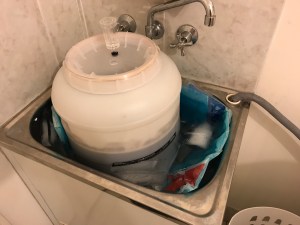
Plate Chiller: These chillers are quite effective and basically have two in pipes and two out pipes, one pipe for wort and one for water. Hot wort passes over rippled plates (to give more surface area) that transfer their heat to cool water on the other side. Here is an example.
Immersion Chiller: These are copper or stainless steel coils that will sit in your boil kettle throughout the boil then when you’re ready to cool you connect one end to a cold water tap and place the other end in a sink or safe place to dispose of the very hot water coming out the other end and run the water through the inside of the coil so the wort transfers its heat to the water in the pipe. This method is very effective, often more effective than the plate chillers, especially when you stir the wort as its chilling. Here is an example.
Couterflow Chiller: These chillers are highly effective but often expensive. They consist of one copper coil inside another, cold water flows in the outer coil and the hot wort flows in the inner coil generally but different companies have different designs. Here is an example, below is a picture of the one that comes with the Grainfather.

Example Options and costs:
Ice Bath: $0
Immersion Chiller, 2m of tubing to connect to tap: $167
Counterflow Chiller, 4m of tubing for tap and wort in/out, pump: $232 ($0 for mid tier option of The Grainfather)
Fermentation
This is the step that turns wort into beer, there are chemical and biological reactions happening constantly that have to be kept at precise temperatures, only problem is that the process gives off heat and wants to constantly exceed those temperatures! To say this is a step you should think seriously about is an understatement. Of all the things that should be on your priority list to get under control, I’d say most brewers would agree that Fermentation should be right at the top.
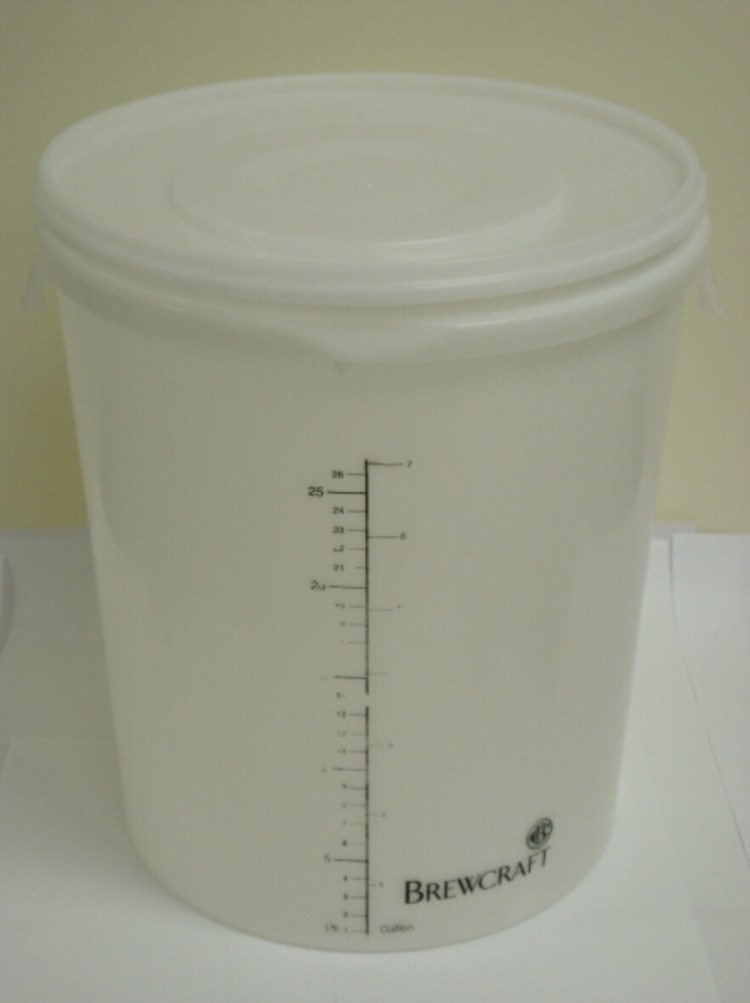
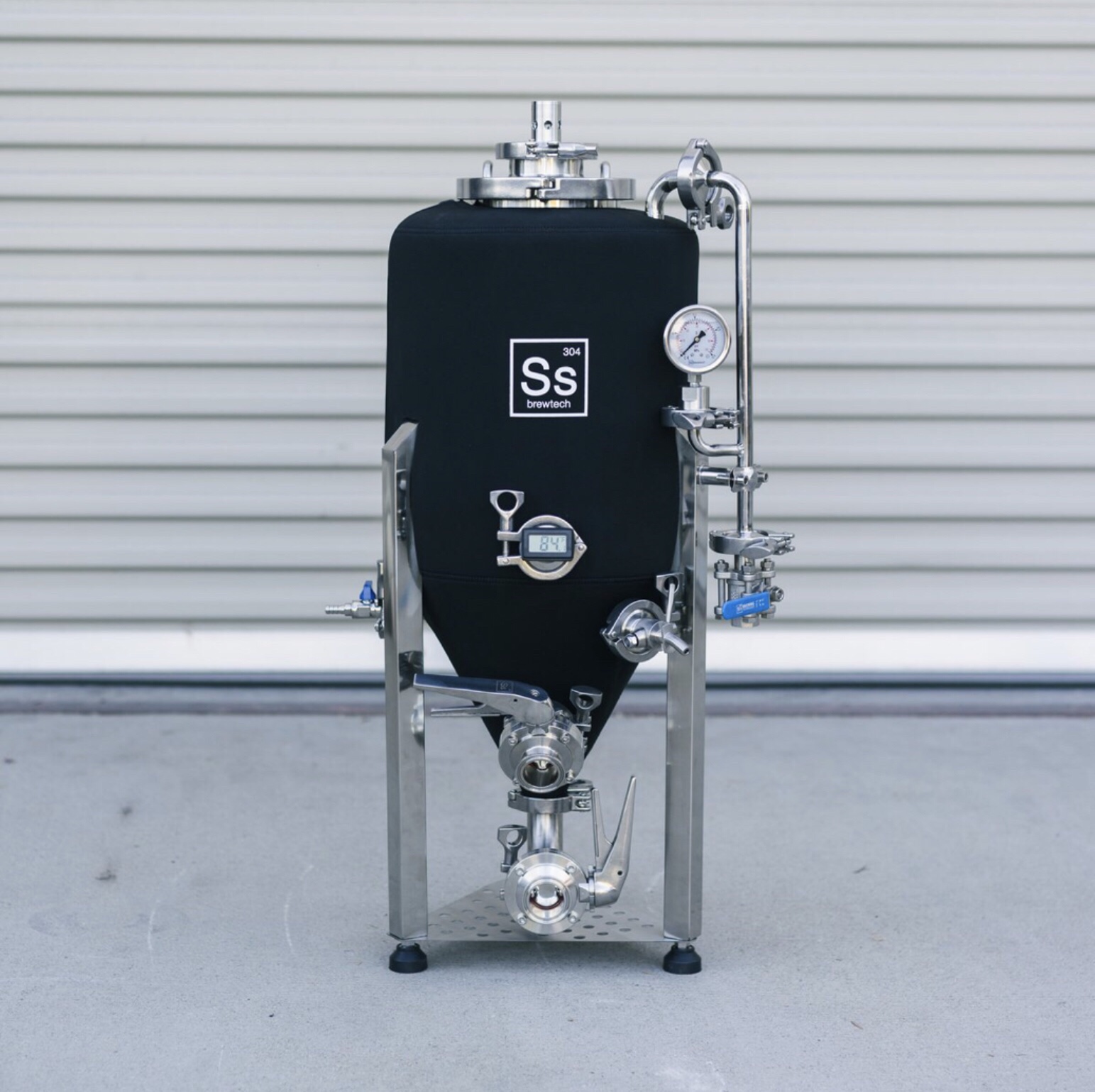
At the very base level, the only equipment you need is a food-safe, sealable plastic tub (like the one above) that can store the amount of beer you require and a place to store it where the temperature won’t vary much from a cool room temperature. The other end of this is an insulated fermenter with an inbuilt coil similar to an immersion chiller with freezing cold glycol running through it. This is similar to the systems that commercial breweries use and is as expensive as it is effective. That is to say, very. See below for an example by SS Brewtech.

Example Options with costs:
Bucket, no temp control: $32
Medium-high tier fermenter, temperature controller, heat pad, 2nd hand freezer (estimated $100): $329
High end Fermenter, Glycol Chiller, Heat pad: $2,344
Packaging
Packaging can mean several different pieces of equipment depending on the path you want to take. There are two kinds of packaging that are the most popular with home brewers today, Bottling and Kegging. They are exactly what they sound like, bottling lets you put your beer in bottles to drink directly out of or pour into a glass, while kegging means putting your beer into a keg, chilling and carbonating it to be placed into a fridge and served on tap.
For bottling you need a capper, bottling wand and caps. A capper is a device that can be standalone or screwed to a bench and looks like this.

A bottling wand is a device that attaches to the fermenter and has a gravity-fed tap on the end that only opens when upwards pressure is placed on it from the bottom of a bottle. This way the bottle fills from the bottom rather than the beer pouring in from the top which risks exposure to oxygen.
Caps should be self explanatory, you place them on top of the bottle and press them down firmly with the capper.
Kegging requires a bit more equipment, namely:
– Kegs….obviously
– CO2 Bottles
– CO2 Regulator
– A Tap
– Gas and Beer lines/tubing
– A fridge/freezer to hold the kegs/mount taps
Kegs come in many different shapes and sizes, the most popular is the 19L Cornelius (Corny) Keg. New they go for about $130-150, 2nd hand they go for about $80-90.
CO2 Bottles and regulators pressurise the kegs to provide carbonation but also to provide serving pressure and push the beer out of the keg. Regulators keep the pressure coming from the CO2 tank regular and consistent to avoid over or under carbonation so your beer comes out of the keg looking like beer and not foam!
The taps and tubing are a given but should be thought about as different taps can give different characteristics to the head and the wrong lines can affect beer quality/head also.
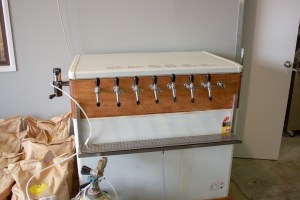
The most important part of this setup is the fridge/freezer to keep the kegs cold, because nobody likes warm beer. These can be bespoke made like this Kegerator from keg king,

Or like this Keezer, home built by Steve at Hoppy Days.
Example Options with costs:
Bench Capper, Bottling Wand, Caps, Bottles (enough for a 23L batch) : $121.50
Corny Keg, CO2 Bottle, Ball Lock Connectors (Gas & Beer), Kegerator: $1,007
Conclusion
This has been a rather large post but could have easily been expanded into a blog of its own. We will continue, in future posts, to dive a little deeper into all of these but I wanted to leave you with a thought, the whole way through I have mentioned a few different paths you can take, a low, medium, and high budget option for each of the categories. These are by no means set in stone and are only designed to be examples of setups you can create but I wanted to add them all together at the end here so you can see what these tiers of systems might end up costing you.
Low-Tier: $458. I feel this is an overestimation really since you can get most of this in a kit for $100, use pots and pans you have at home and save the bottles from the next few cartons of beer that you buy! Maybe $200 if you’re on a real budget.
Mid Tier: $1,969.49 if bottling, $2,854.99 if kegging
High Tier: $6,091.99, I honestly feel like this is a starting point for high end equipment and know it can easily reach into the $10k+ range.
Thanks for joining me this week, look out next week for a post all about our favourite sugar-giving ingredient, Malt!
Check us out on Facebook, Twitter or reach out to us on Reddit!
 New Beer-ginnings